

The English Electric Type 3 aka Class 37 has been a venerable example of British Rail engineering for over half a century, continuing to prove their worth and adaptability to a ever evolving industry.
With several examples still in revenue earning service and others representing their classmates in preservation, a time capsule of Class 37 703’s international career joins the Rail Tags fleet.
1: Pre History
As part of the British Rail Modernisation Plan in the 1950s Dieselisation was bought about to start withdrawing Steam for Diesel traction.
With The English Electric Company’s success producing electric and diesel traction for both home and export markets (East Africa) and the requirement for a true “Type 3” locomotive the British Transport Commission awarded a tender to English Electric during 1959 for 42 locomotives based off their successful export range but adapted to the national market needs.
Such adaptations included the de-rating of engine horsepower from 2,024 to 1,750hp. Internal components were largely based on the same designs as the pre-existing Type 4 locomotives for quicker production and minimal costs.
As with many locomotives of the British Rail era construction was initially based at Vulcan Foundry in Newton-le-Willows however British Railways was eager to replace Steam with Diesel traction at the earliest opportunity placed multiple additional orders for the EE Type 3 which ended up totalling near 309 locomotives. The massive increase in the demand had the detrimental potential to overwhelm Vulcan Foundry as they had orders to fulfil for the export market as well as the EE Type 4 (later known as the Class 40), Type 5 (Class 55), Type 2 (Baby Deltics) and Type 1 (Class 20)
To avoid straining the supply chain at Vulcan Foundry work on the Type 3 was sub contracted to Robert Stephenson & Hawthorns in Darlington.
On December 2nd 1960 the first loco D6700 came off the production line and was allocated to Stratford Depot in East London with initial allocations being between Stratford, March (Cambridge), Norwich, Ipswich, Sheffield / Tinsley, Thornaby, Gateshead, Cardiff and Landore.
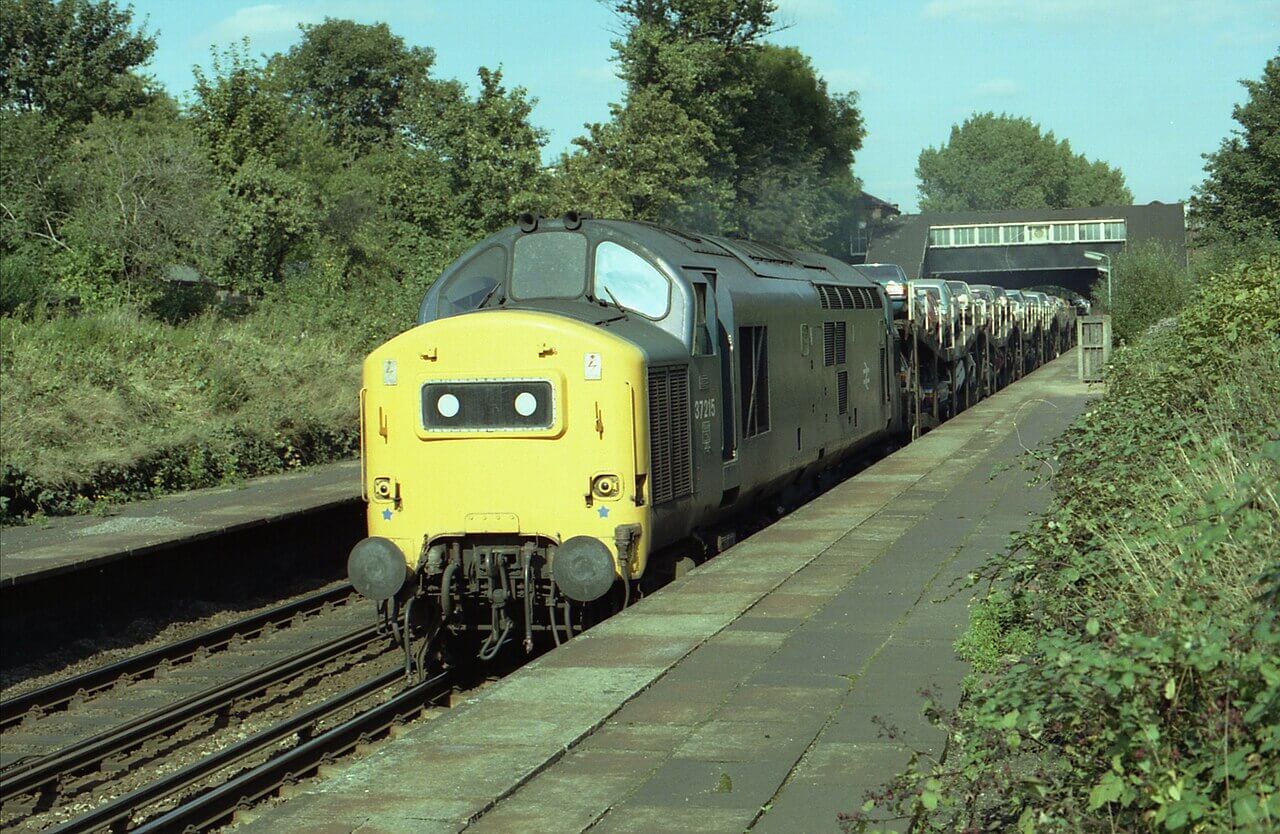
Above Image:
Class 37 215 takes a Motorail service through the North London Line circa Late 1970s
(CC BY 2.0) – Barry Lewis
2: Introductory Operations:
Upon delivery and entry into service the Class 37s found regular mixed traffic work across the entirety of England, Wales and Scotland, however this was not without their fair share of problems. The 37s struggled to match the 93% availability requirements compared to English Electric’s exported 90 Class narrowly achieving an 85% availability rate with D6983 becoming the first locomotive to be written off just over a year after entering service after a collision in Bridgend.
Regardless of the issues the locos found frequent work with heavy freight, coal, oil, intermodal services, china clay and parcel services along with passenger services.
In the early 1970s during the process of standardisation the Class 37 was selected to be the primary Type 3 locomotive, able to work individually, but also in pairs and trios.
A proposal was put forward to gear Western Region allocated locos for 100mph running services between London Paddington and Bristol however this was subsequently abandoned due to the heavy wear this caused.
Many variants were built of the Class 37 with different types being seen across multiple regions such as split headcode and centre headcode boxes, flush fronts and front access doors being notable examples.
2.1 Refurbishment and Modifications:
By the 1980s the Class 37 earned their reputation being the backbone of the railways up and down the country with modifications being made to further adapt them to the ever evolving demands of the industry.
A notable example was the introduction of Electric Train Heating equipment, becoming the Class 37/4, 37/3s which were rebogied but not refurbished, 37/5s which were refurbished, rewired and had Brush Traction Alternator equipment added and the 37/6s which featured the modifications the /5s had with the addition of ETS wiring and RCH jumper cables for the proposed continental Nightstar Sleeper service which never came to fruition.
Additionally in 1986 the Class 37/9 subvariant rolled out with their English Electric generator equipment switched out for Brush alternators also being fully re-engined with either Mirrlees or Ruston powerplants with intentions of developing a new locomotive proposed to be the Class 38 to provide competition to the American market’s Class 59, however this plan was dropped due to changing priorities by the British Rail board.
The 1990s bought the start of privatisation and with that, bought the intention to start replacing modernisation era locomotives with newer, more flexible and stronger locomotives reflecting the advancements made since the introduction of the 37s back in the 60s culminating with the Class 66.
The introduction of the Class 66s saw EWS, the primary operator of Class 37s under privatisation saw displaced locomotives sold off or withdrawn and sent for scrap.
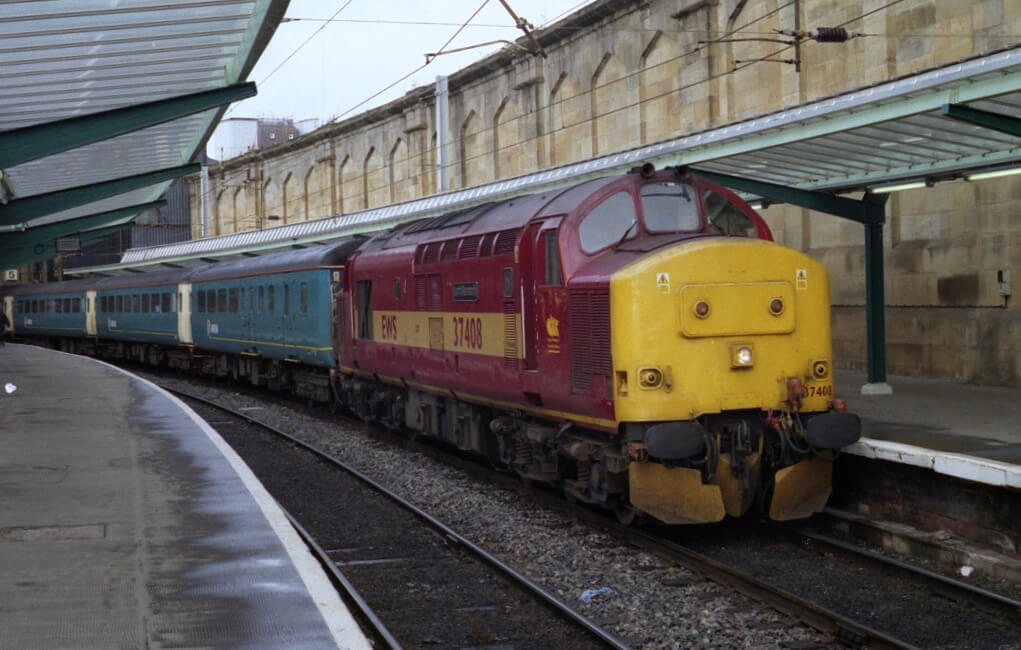
Above Image:
Class 37 408 “Loch Rannoch” in the stunning EWS Livery sitting at Carlisle with a rake of MK2 coaches to cover for a DMU shortage at Arriva Trains Northern.
(CC BY 2.0) – Phil Richards
3: Going Continental With 37703.
In 2.1 we intentionally missed out a variant of the Class 37 to save for chapter 3, this is the Class 37/7.
The /7 variant like the other subclasses were refurbished and rewired with their English Electric generator replaced with GEC G564AZ or Brush alternators with ballast added to increase the weight and therefore pull power.
This subclass was intended for heavy freight work and were frequently found in South Wales operating heavy coal and metal hauls, eventually their duties were taken over by Class 56 and Class 60 locomotives and with the introduction of Class 66s the 37/7s found themselves out of work. This was until Spain came calling.
37703 was stood down from service in 2000 but allocated to EWS’ special projects department where it was initially designated as L023 and departed for Spain along with 37714 in 2001.
Both locomotives along with sisters of the Class were assigned to assist with the building of the Madrid to Barcelona High Speed line for Renfe’s Alta Velocidad Española services which opened in 2008.
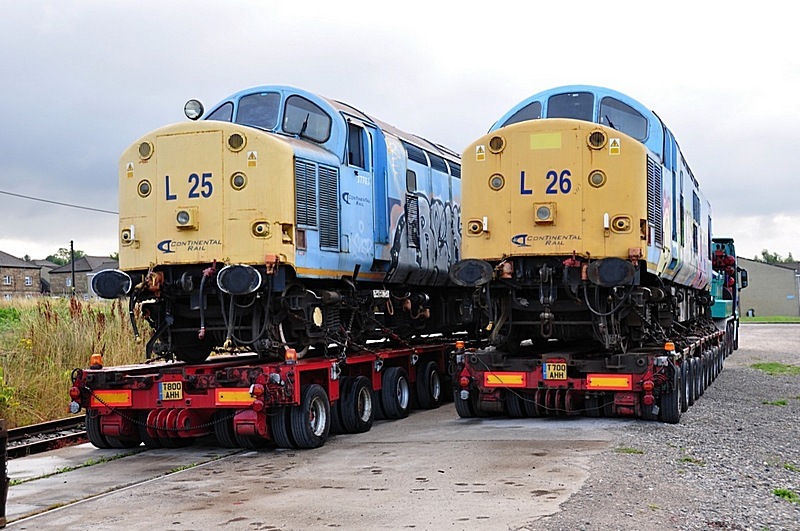
Seen above is L25 and L26 (37703 & 714) after arriving back in the UK post completion of their abroad duties. Both locomotives were transferred to Barrow Hill with 703 receiving work to put her back in service.
37 703 was eventually sold to DRS from EWS, painted in a standard dark blue livery and renumbered to 37067 giving the loco a second chance at life on the mainline railway.
Eventually 067 was renumbered back to 37703 and preserved in an operational condition come 2023. 37 703 now wears the Trainload Grey Coal livery and resides at the Dartmouth Steam Railway.
Our story with 37703 comes from metal fabrication works carried out at Barrow Hill where the side Continental Railways logo was cut and sold off.
Very kindly, this panel was offered to us to make tags from, and with people asking for Class 37s one day, we know it was something that had to be done.
Whilst 37703 carries on it’s story in the west country, we are delighted to add a Class 37 with such an interesting history to our fleet, being our first dive into a piece of international rolling stock with history made across the Channel.